Sencha Matcha: a story in its own right


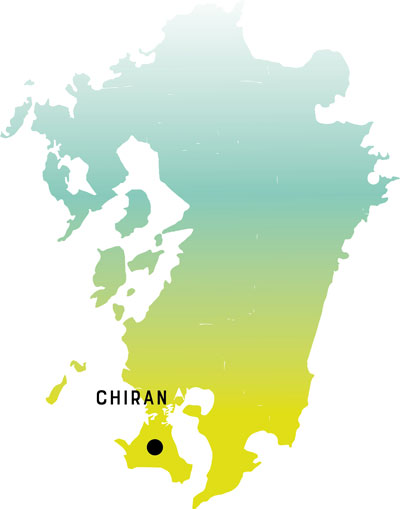
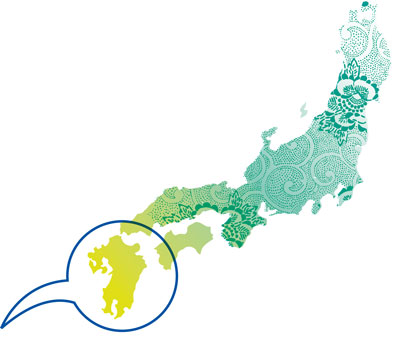
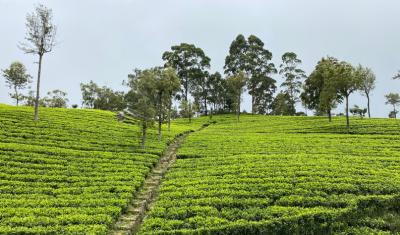
The island of Kyushu, in the far south of Japan, is regarded as the cradle of Japanese civilisation and tea culture, as it was here that, in the 12th century, the monk Eisai planted the first tea bushes in Japan, which he had brought back from China. The fertile volcanic soils (Kyushu is known as the ‘Land of Fire’) and the intense sunshine have enabled the production of remarkable teas since the Meiji period in the 19th century. In the mountainous region of Chiran, the sencha and matcha teas are renowned and regularly win national awards.

These teas have a refreshing, intense flavour with plenty of body, but are also milky with plenty of umami.

Indeed, these organic teas grow slowly. The mist filters the sun’s rays and increases the humidity, so the leaves produce fewer catechins (less bitterness) and more L-theanine (mildness).

Sencha

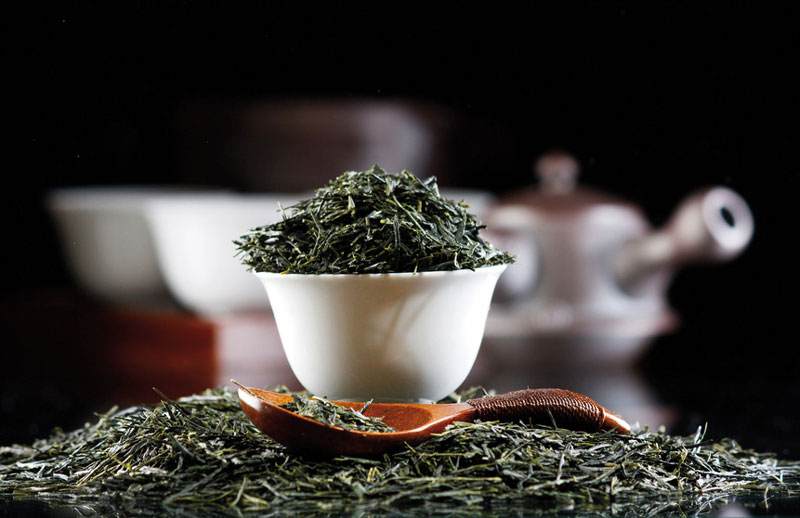
After harvesting, sencha is steamed for a few seconds to halt the oxidation process and preserve its green colour, followed by a complex process involving various stages of kneading and rolling to develop the flavour and shape the tea into fine needle-like strands.

Japan: a source of elegance and refinement!

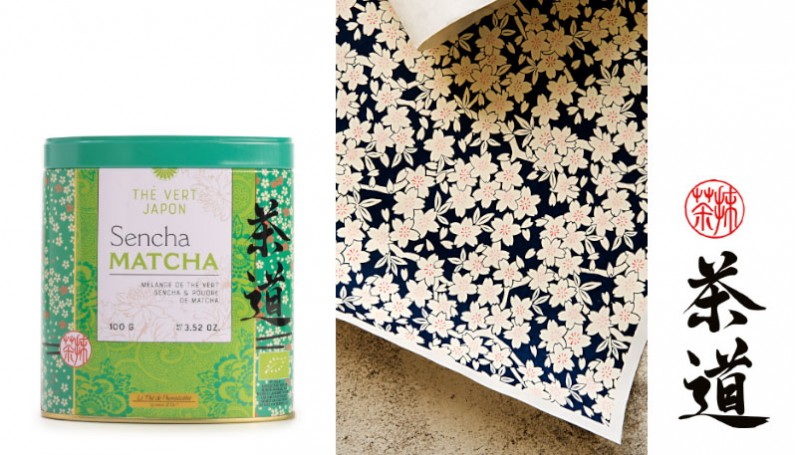
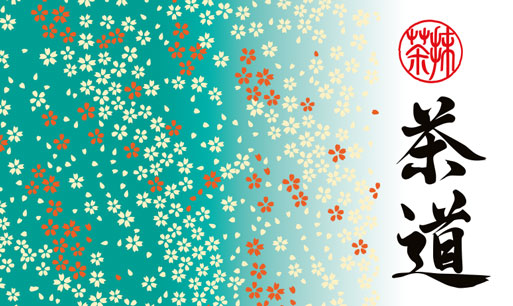
We crafted the interior of the box using chirimen, a traditional Japanese fabric used to make kimonos, whose pattern of sakura cherry blossoms enchanted us. We drew inspiration from Japanese kanji characters or ideograms rendered in Indian ink (black and red), chrysanthemums (in fine lines) – an imperial symbol – at the centre of the box, and above all the blue-green colour so beloved by the Japanese, which they call ‘aotake-iro’, meaning bluish bamboo.

The prestigious Matcha

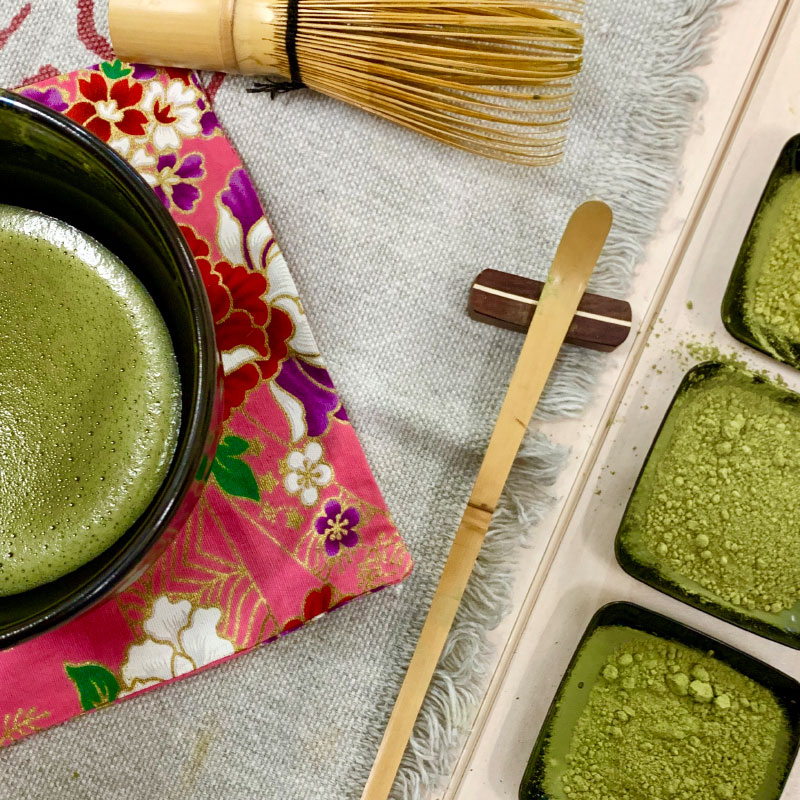
Matcha, whose name means ‘finely ground tea’, is a tea whose plants are shaded for a few days before harvesting in order to develop certain components and its characteristic flavour (chlorophyll and flavourful amino acids).After harvesting, it is immediately steamed and then dried, at which point it is known as TENCHA.It is then ground into an extremely fine jade-green powder. It is from this stage onwards that it is called MATCHA.

It is the quintessential tea of the Japanese tea ceremony known as
‘CHA NO YU’: the tea is whisked according to an unchanging ritual.

Matcha is highly prized for its flavour and its exceptional health benefits: it is rich in antioxidants, vitamins and amino acids, and is known for its detoxifying properties.

When blended with SENCHA tea leaves, it imparts a unique, well-rounded and mellow flavour.

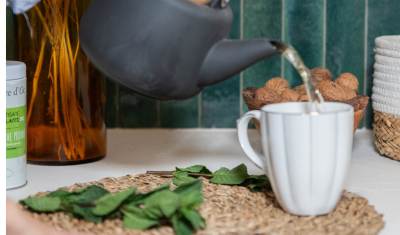
A simple, easy and hassle-free way to enjoy matcha tea: 2 g of SENCHA/MATCHA (one teaspoon for a mug of approximately 150 ml), left to infuse for 3 minutes in water at 80 degrees.

 
Posted in: Tea time