
Free delivery on purchases over €49 in mainland France !
Gift card: The perfect gift idea to delight your loved ones.
-
< Back
-
-
Teas
- Voir tous les produits
-
-
-
-
-
-
- Herbal Tea and Rooibos
- Voir tous les produits
-
-
-
-
-
- Natural home
- Voir tous les produits
-
-
-
-
- Rituals
-
Back - Natural home
-
Back - Herbal Tea and Rooibos
-
Back
Through Its Commitment to 1% for the Planet, terre d’Oc Supports P-WAC
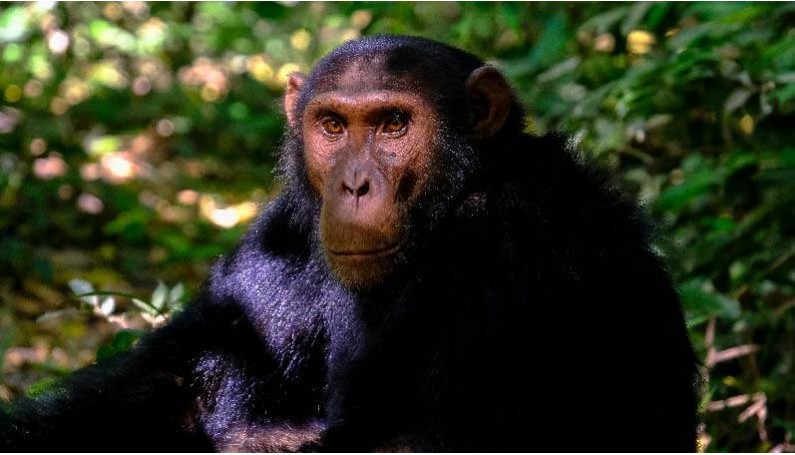
As part of its commitment to 1% for the Planet, terre d’Oc is supporting P-WAC this year, an NGO led by a young and passionate primatologist working in the primary forests of Central Congo. Its mission is to care for and protect primates from poaching and deforestation. This ambitious project actively involves local communities, particularly the women who live in the forest, empowering them to become ambassadors for chimpanzee conservation within their villages.
Involving Local Communities
P-WAC is a human-scale project. On site, a small team made up entirely of local villagers carries out the day-to-day work. Apart from the project’s founder, who lives at the rehabilitation center, and the occasional visiting veterinarian or international student, P-WAC is committed to ensuring that the project is developed and operated exclusively with members of the local community—people from the surrounding villages.
From the very beginning, every step has been taken in consultation with village chiefs and family elders.
Today, the local team includes eco-guards, surrogate parents, and primate caregivers, all recruited from nearby villages and trained for professions that were previously unknown in the area. In fact, aside from cassava farming, there is virtually no economic activity in the region where P-WAC operates. By providing local people with the opportunity to secure stable, paid employment, P-WAC has earned the trust and support of the surrounding communities. Beyond the economic benefits and the opportunity it offers several families to enjoy improved living conditions, with reliable incomes, the involvement of local communities has also had a significant impact in terms of awareness and education. P-WAC has carried out numerous outreach initiatives, including interviews on community radio stations, messages delivered in churches and schools, and public conferences.
Yet it is the workers themselves who most effectively communicate the project's purpose and value to their communities.
Although many initially joined the project for the income, working daily alongside primates—wild animals they had previously known mainly through hunting and culinary traditions—allowed them to see these animals in a completely new light.
They naturally began to recognize the similarities between humans and monkeys: emotions, family bonds, and hands so remarkably similar to our own.
Their experiences have become a powerful message in themselves, and these workers have turned into ambassadors for primate conservation within their villages. It is a remarkable success story.
P-WAC originally envisioned a predominantly female workforce, with the aim of creating employment opportunities for women from local villages. However, some husbands opposed the idea of their wives spending weeks away caring for animals, leaving behind the many responsibilities traditionally borne by women in rural African communities: caring for children, cooking over wood fires, collecting firewood, fetching water, and working in the fields with children on their backs.
The fact that some men resisted women's participation and that some mothers were forced to leave their positions did not discourage P-WAC from continuing to involve this underserved community. After all, women are at the very heart of the P-WAC identity and even represented in its logo.
As a result, it was decided that the reforestation program would be carried out exclusively by women from the surrounding villages. Guided by a local father and botanist whose knowledge of native plants is invaluable, groups of mothers collect young seedlings and gradually reforest the land surrounding the rehabilitation center.
To date, 1,000 forest trees known to be part of the chimpanzee diet have already been planted, with many more to come.
Following this initiative, two women whose children are now old enough to care for themselves, and who are no longer living with their husbands, came forward to offer their services to the project. Today, Mama Charlotte and Mama Béa are part of the surrogate parent team caring for young orphaned chimpanzees. The team continues to grow, and P-WAC hopes to recruit even more people in the coming months.
For more information: www.p-wac.org
Related posts
-
Would you be interested in joining 1% for the planet?
Posted in: Commitment16 • 11 • 2019This question was launched by the Director of the Fondation Nature et Découvertes when he visited us in 2017....Read more -
Fair For Life supply chain for organic rooibos from South Africa
Posted in: Commitment16 • 11 • 2019During my trip in April 2019, I had the opportunity to meet the teams behind the Fair For Life (FFL) project. Despite...Read more -
Empowerment of women
Posted in: Commitment06 • 03 • 2020Le 8 mars, c’est la journée internationale des droits de la femme, l’occasion de rappeler qu’il faut travailler pour...Read more