
Free delivery on purchases over €49 in mainland France !
Gift card: The perfect gift idea to delight your loved ones.
-
< Back
-
-
Teas
- Voir tous les produits
-
-
-
-
-
-
- Herbal Tea and Rooibos
- Voir tous les produits
-
-
-
-
-
- Natural home
- Voir tous les produits
-
-
-
-
- Rituals
-
Back - Natural home
-
Back - Herbal Tea and Rooibos
-
Back
Travel Journal: Portraits and Smiles from Sri Lanka
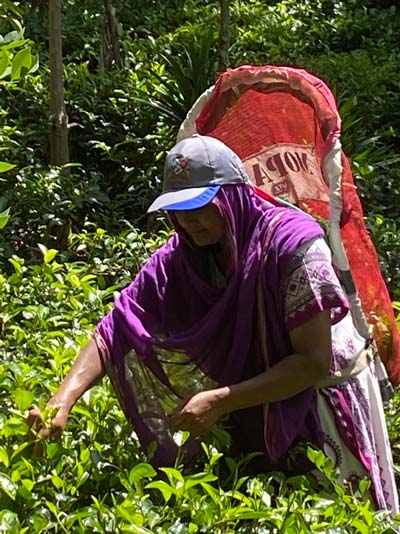
Portrait n°1 : Inaya Inul Rapthpaha Mirahawatta
Why? First, to help create opportunities and provide additional income for her family, because she wanted the very best for her children. Secondly, because it is organic farming, free from pesticides. Organic agriculture is better for the health of the entire village.
Inaya has three children and has been married for many years. Her husband, who is 60 years old, runs the village’s small grocery store.
Her eldest son is 30 years old and works in the textile industry in Kandy. Her second son, Nifadh, aged 27 and single, holds a degree in agriculture. He works as a researcher in Badulla, identifying the best crop varieties, including maize and sorghum, to feed Sri Lanka’s cattle. He works five days a week, between eight and ten hours a day, and enjoys his work. Whenever possible, especially during holidays, he travels home by train to visit his family. Her daughter, Siska, is 22 years old and is pursuing online studies in pharmacy. These studies are fee-paying and account for approximately one-third of the family’s income.
Education for her children is Inaya’s greatest dream. She wants to give them a bright future and a lasting legacy.
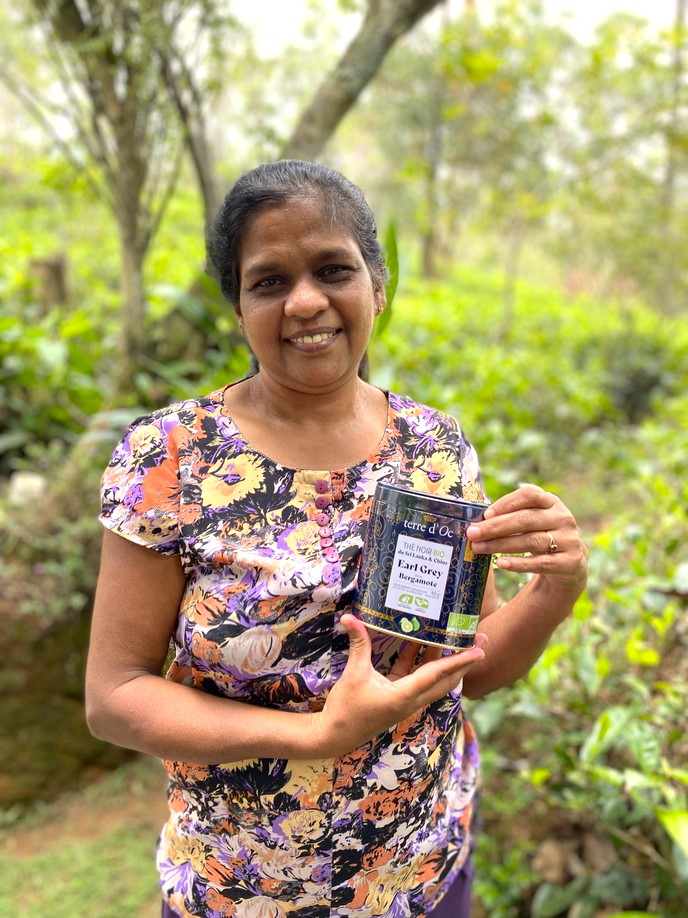
Every day from 10:00 a.m. to 2:30 p.m., she goes behind her charming pink house to harvest tea leaves from her half-acre garden, which slopes gently. The tea plants donated by Terre d’Oc last year are thriving. She received 150 of the 1,000 plants we donated. Inaya believes she will be able to begin harvesting them next year.
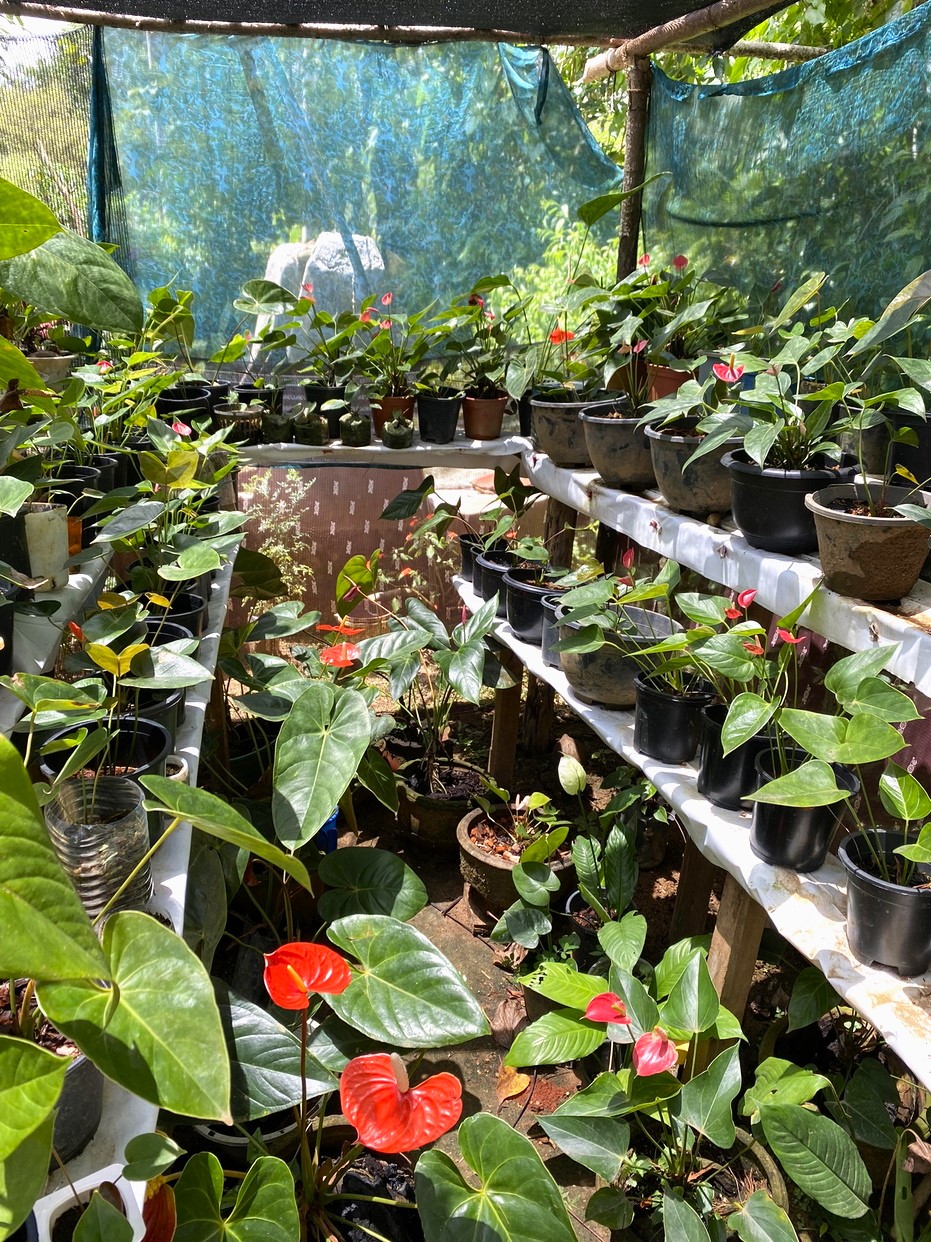
2021 was a good year, with abundant rainfall. Nearly 150 kg of tea were harvested, generating close to 15,000 Sri Lankan rupees in income (around €45). October was the best month, with nearly 20 kg collected. Inaya would love to have more land, but none is available in the village. To generate additional income for her family, she set up a small greenhouse where she grows flowers that she sells at the local market. At the same time, she also helps her husband run the village shop. Together, these activities provide the family with a monthly income of around 50,000 rupees, or approximately €150.
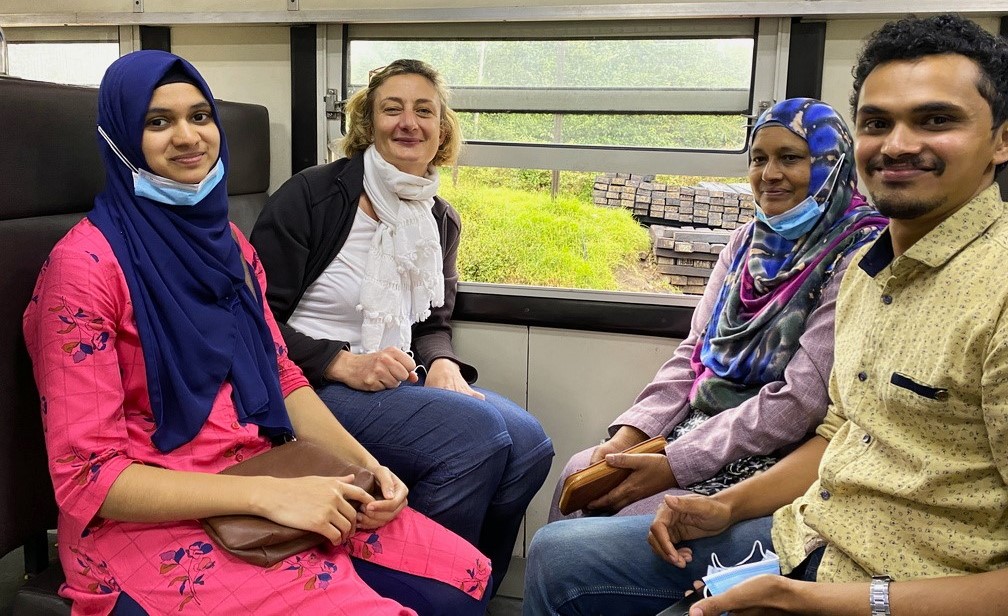
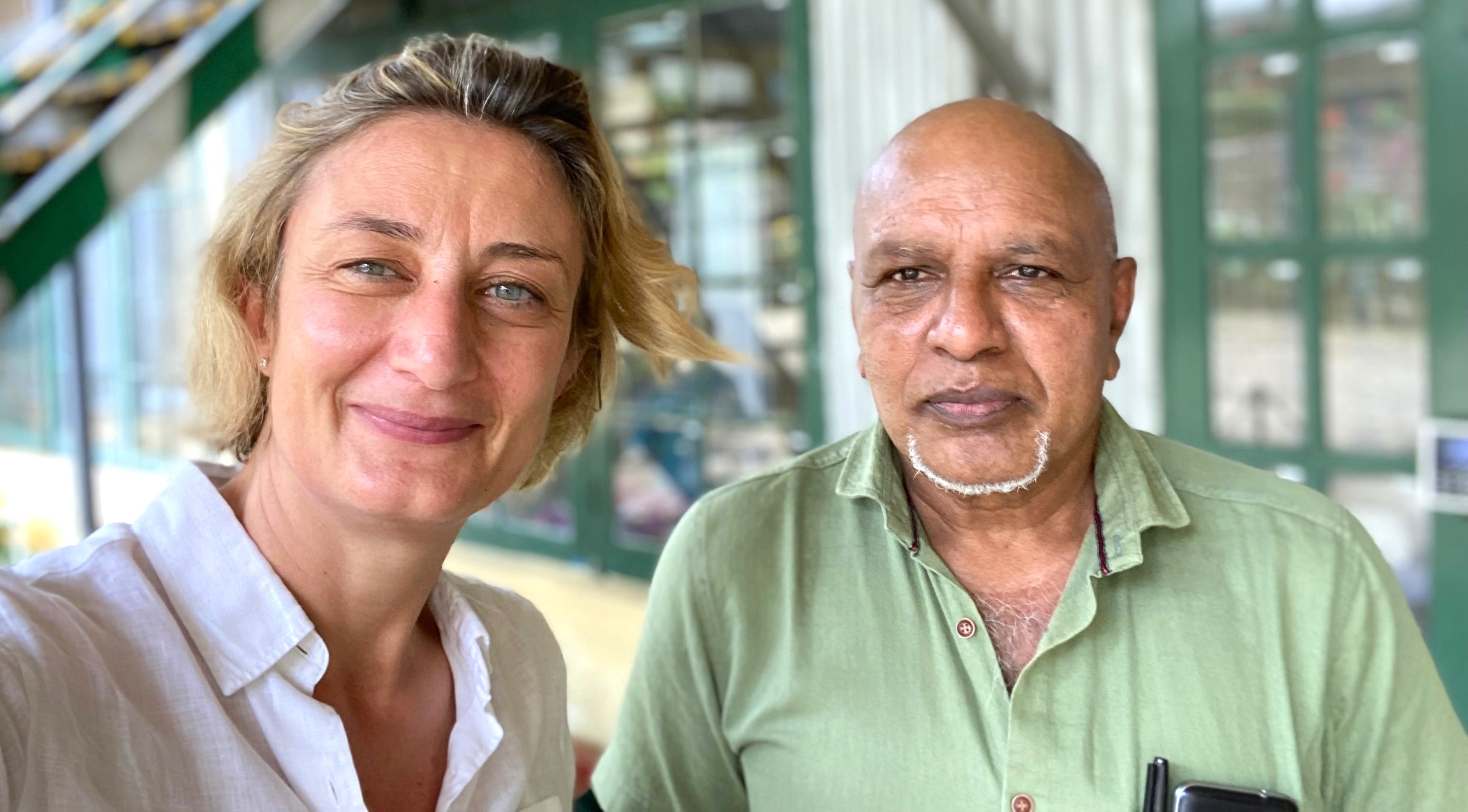
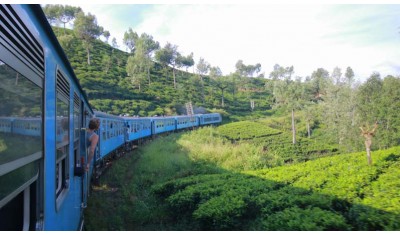
We then took the train with the family to travel through the tea plantations. It was a meaningful and heartfelt moment of sharing. The family told me about their lives.
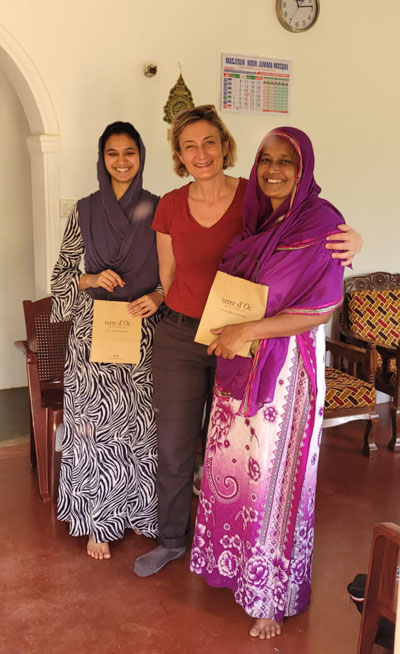
Inaya showed me the photos from her eldest son's wedding. They were beautiful. She was proud. Nifadh told me about his dream of working in France on a dairy farm. He sent me his résumé, and I will do my best to help him. Siska is continuing her studies and would benefit from having a computer. I will send her one when I return home. To conclude this emotional visit, the family presented me with a “Golden Souvenirs Book”. In just two days, they had already printed the highlights of the moments we had shared together. We said our goodbyes on the train platform, where Nifadh took a few final photographs. We embraced. Inaya said that she felt as though she were living a dream, and Nifadh, with whom I continue to exchange messages on WhatsApp, thanked me with the words “thank you mom.” The bonds we have created will last for a very long time.
An exceptional woman, a deeply moving encounter, and the talent of a woman who cares for both her community and her family.
Portrait n°2 : Dammika Kumuduni
Today is a special day in Ammunule, a village in the Uva region, where a group of women tea producers belonging to MOPA has gathered. Together with the leadership team of our partner organization, I am visiting the group’s leader, Dammika Kumuduni. We are here to present her with the Excellence Award for Best Environmental Manager, a distinction earned for the year 2020 but which could not be awarded earlier due to the health crisis. Dammika proudly receives her award after several speeches celebrating her achievements. She then invites us to enjoy the refreshments she has prepared. At every visit, we are warmly welcomed with tea and traditional Sri Lankan pastries.
Portrait n°3 : Wasantha Kumara
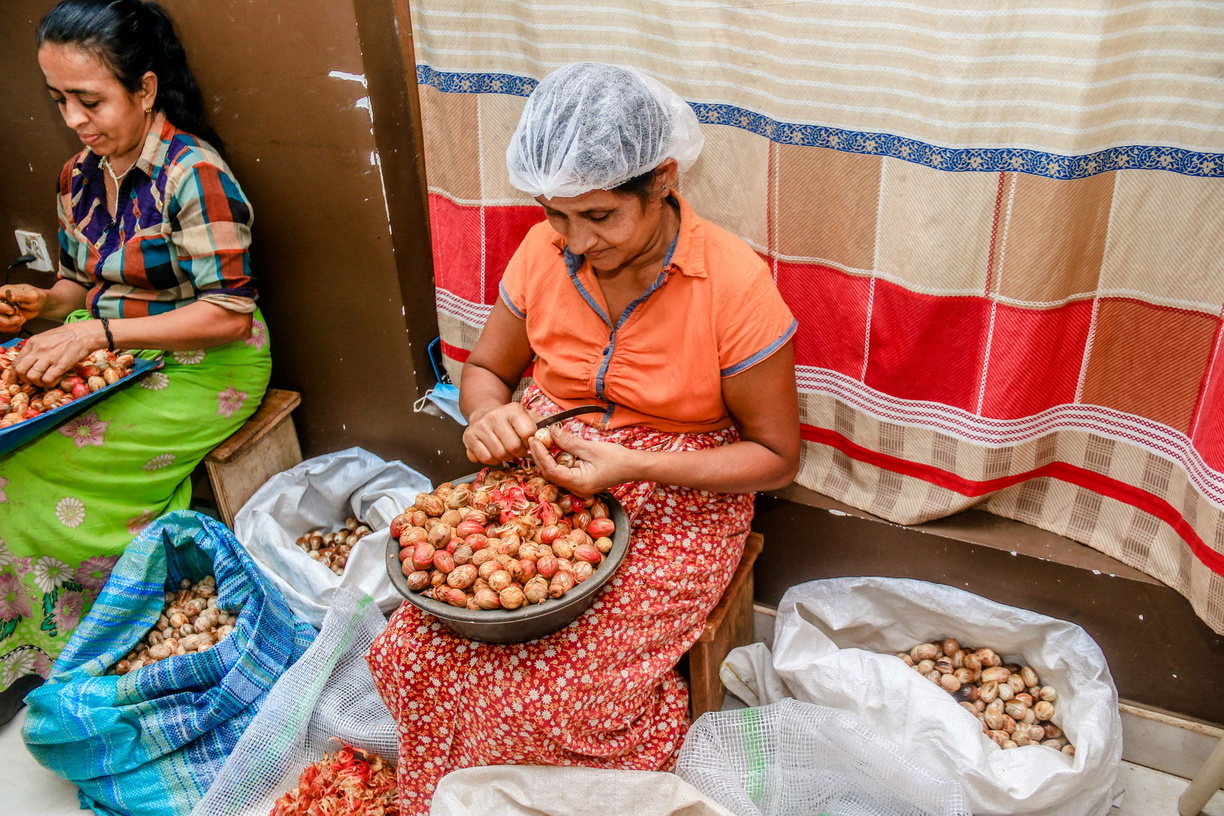
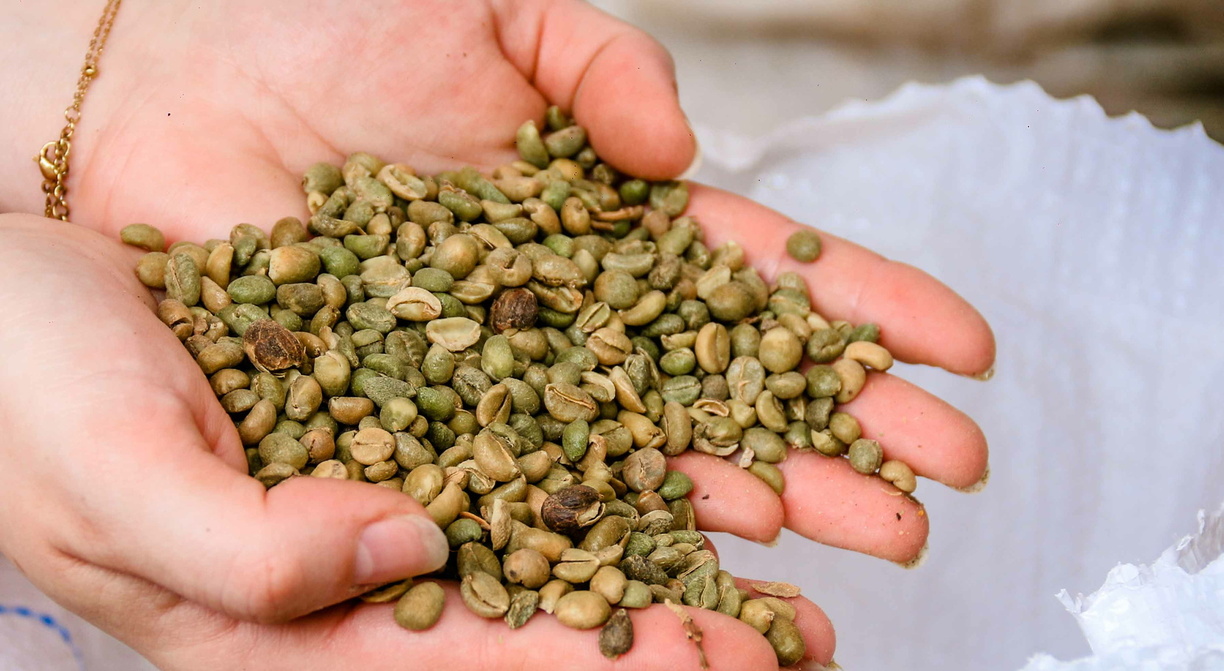
Wasantha is the leader of the Pooja Pitiya community, near Kandy. This is also a sub-unit of MOPA. The village is home to 28 families and a total of 88 residents. Wasantha is 52 years old. After a career in the Air Force, he retired and worked in the timber industry. Uncomfortable with the idea of cutting down trees, he decided eight years ago to take over his family's land and grow organic spices and coffee. He takes me on a tour of his lush, jungle-like property, across steep and slippery slopes down to the river. As we make our way through his farm, every turn reveals a new tree, a new spice. The landscape is incredibly rich and luxuriant, with life thriving everywhere.
Pepper, cocoa, nutmeg, cardamom, and coffee provide him with a comfortable income. Altogether, he owns 6.5 acres of spice plantations and leases 8.5 acres of coffee-growing land from the state, where both Robusta and Arabica varieties are cultivated.
In general, there are two harvests per year, and he can harvest up to 24 tonnes of pepper, 165 tonnes of fresh nutmeg (which yields about half that amount once dried), and half a tonne of cardamom.
Here, working in the fields is challenging: the plantations are steep and slippery, making harvesting difficult. As a result, the men typically carry out the picking, while the women perform the initial preparation of the spices before they are sent to the processing facilities.
Wasantha has two children: a daughter who is a university professor and a son who is continuing his studies. For now, neither plans to take over the family farm. This is rather unfortunate, especially considering that just last week Wasantha welcomed Maison Roellinger to his plantations. Like terre d’Oc, they source their ingredients here, attracted by the same values: organic farming, fair trade, and exceptional quality.
Portrait n°4 : Yorgeswari
It was in Maha Uva, or “Great Uva”, that I met Yorgeswari in the tea gardens and Mohandas in the factory. Both have worked here for many years, just as their respective mothers and fathers did before them. The tradition and culture of tea have been passed down from generation to generation, but for how much longer?
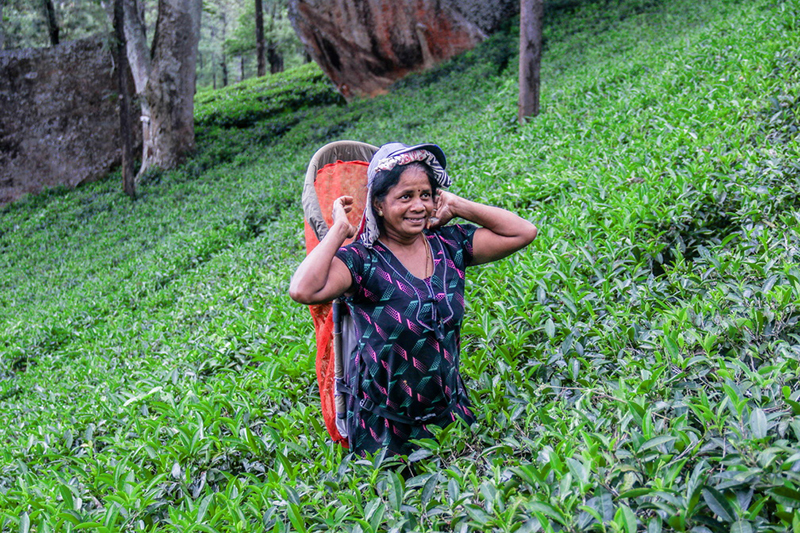
Yorgeswari is 42 years old and has been harvesting tea for her community through MOPA for the past 10 years.
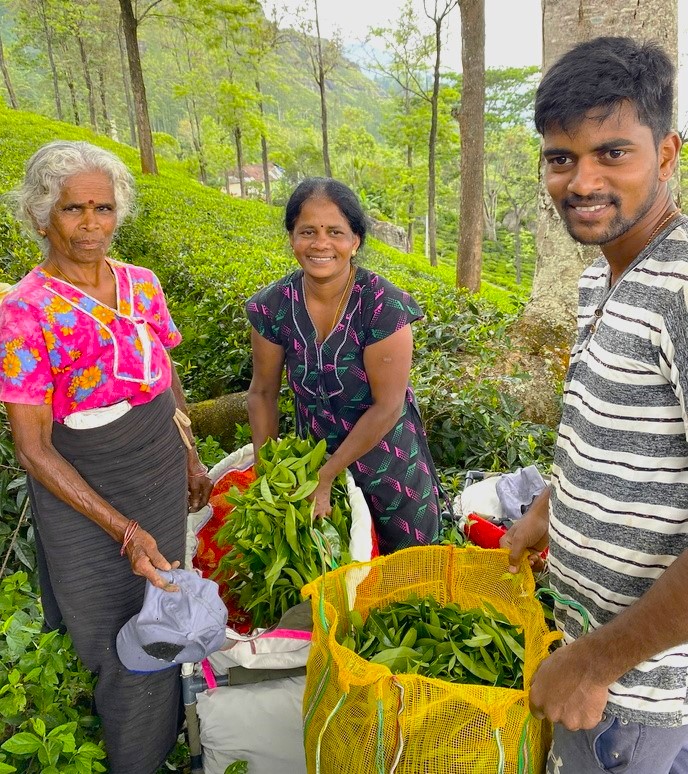
She is happy about it because, through MOPA and organic farming, she earns a better income. It is a family tradition. Her mother was also a tea picker before her. She is the proud mother of four sons. One of them, Mohan, works here alongside her in the tea gardens. Standing on a large rock above, he keeps watch and helps his mother and the other women fill the sacks of tea leaves before carrying them to the factory. Together with her son, she shows me the entire process: which leaves to pick, how to empty a basket when it is full, and just how heavy a filled sack can be.
Her son helps her, but he does not pick tea leaves, as it is traditionally women’s work. Yorgeswari has only had sons. No one will carry on her work when she retires.
Portrait n°5 : Mohandas
Mohandas is 63 years old. Today, he is the manager of the Maha Uva factory, which employs 60 people from the surrounding area. They come to work every day from 7 a.m. to 4 p.m. and produce approximately 35,000 kilograms of black tea per month. Mohandas has worked in the tea industry for 40 years. At the beginning of his career, he worked in the tea plantations. Gradually, he worked his way up and became the factory’s office manager in 1978, following in his father's footsteps. In 1995, his father had also started out in the plantations before becoming a tea administration officer at the factory.
Like everyone I met, Mohandas is happy to work in organic agriculture, both for himself and for his employees, because there are no longer any health issues linked to the use of chemicals. But is the next generation ready to take over? He has two daughters, one is a nurse and the other is a teacher. Neither of them will work at the factory.
After all these encounters, I find myself reflecting on the future of Sri Lanka’s tea plantations.
All the tea pluckers and workers I met dream of providing an education for their children and work hard to finance their studies. As a result, their children are able to attend university and gain new opportunities. These are the young people who, in April 2022, were protesting against the President and the government in Colombo, seeking change. So who will take over in the tea gardens? People spoke to me about modernization and mechanization as ways to develop easier, more sustainable agricultural solutions and attract younger generations back to the tea industry. But will machines be able to deliver the same level of quality? A major challenge for the future.
Related posts
-
Meeting the tea women in Sri Lanka
Posted in: Trips16 • 11 • 2019From Hapulate, there is not better way to discover the plantations and delight in the steep landscapes and the lush...Read more -
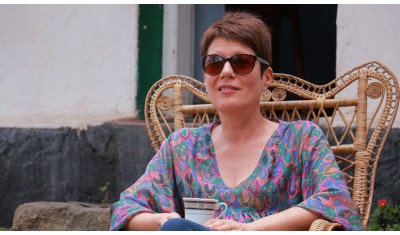
Valérie, founder of terre d'Oc. What's in your teapot, Valérie!
Posted in: Portraits16 • 11 • 2019Interview réalisée pour le blog «d’envouthé» (une jolie boite cube pleine de surprises autour du thé que l’on peut...Read more -
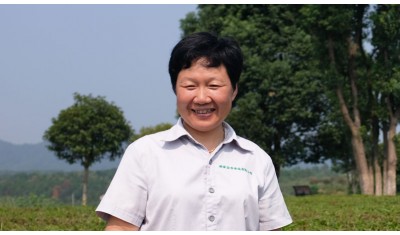
Portrait of an organic tea picker in Hunan (China).
Posted in: Portraits16 • 11 • 2019"My name is Lin Xiao Ping, I'm 52 and I have been harvesting tea for 20 years. I love this work even though it's very...Read more
Search in blog
Latest posts
-
-
Inspiring Women: Those Who Change the World, from Yesterday to TodayRead more25 • 03 • 2026Posted in: Commitment -
Mint green tea vs mint infusion: what are the differences?Read more30 • 01 • 2026Posted in: Tea time -
Detox hot drinks: green tea, rooibos or infusion after the holidays?Read more18 • 12 • 2025Posted in: Tea time -